Budget Rug Layering Ideas: $58
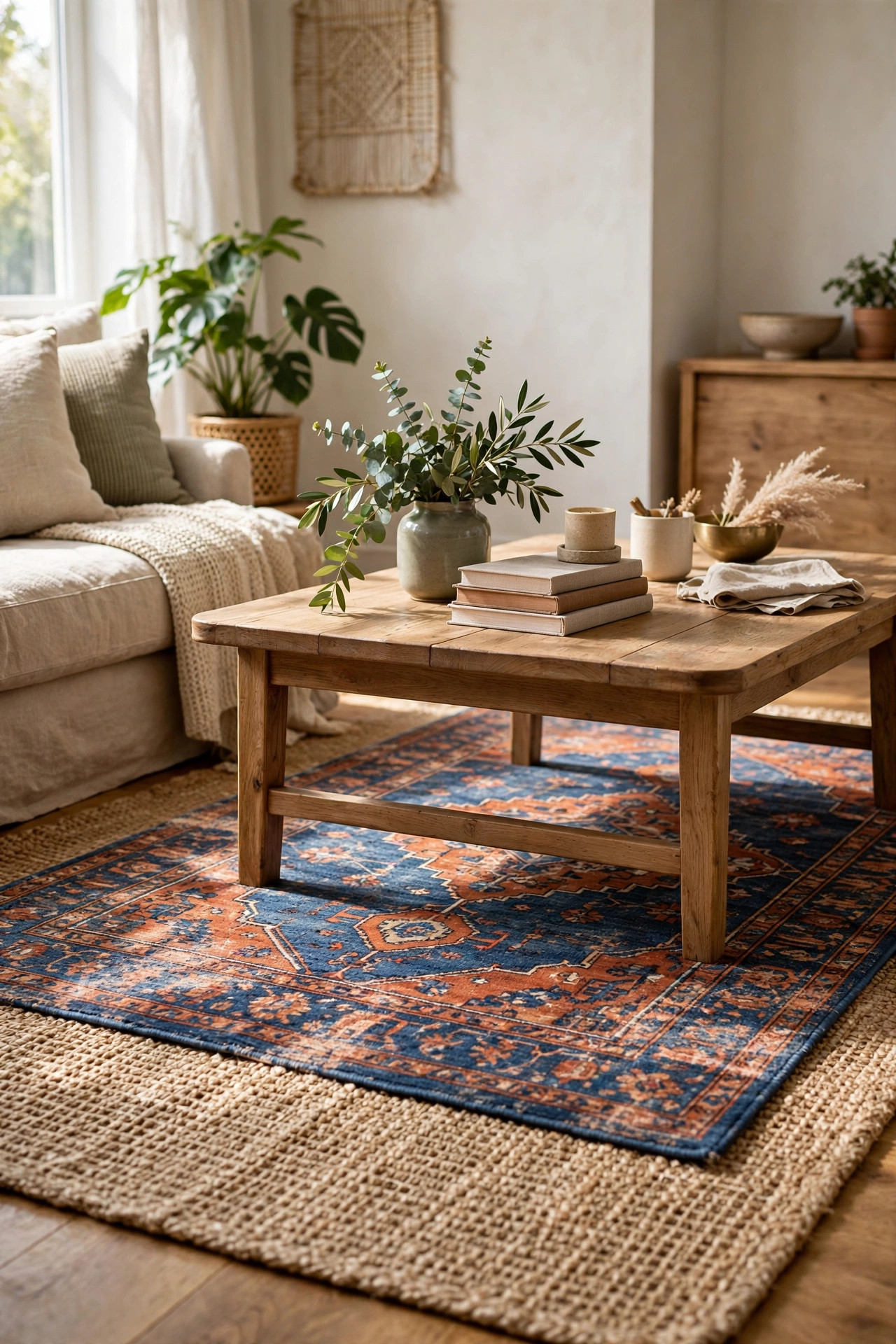
Rug layering is the interior design trick that looks like money and costs almost nothing: a big, cheap neutral rug as the base, with a smaller, more interesting rug on top. It solves the two classic rug problems at once — the rug you love is too small for the room, and the rug that's big enough is boring. Together, they look intentional, collected, and far more expensive than either one alone.
This layered look cost $58: a 5×7 natural-fiber base rug, a 3×5 patterned top rug, and a non-slip pad to keep everything in place. No tools, no sewing, no installation — just placement rules that make the difference between "two rugs on the floor" and "designer layering." If you can move furniture, you can do this in an afternoon.
Materials You'll Need
- Large neutral base rug, 5×7 (jute or flat-weave) — $35
- Smaller patterned top rug, 3×5 — $15
- Non-slip rug pad or grip mat — $8
Step-by-Step Instructions
- Measure the room and the furniture. The base rug should be large enough that the front legs of the sofa (and any accent chairs) sit on it — for most living rooms, that's a 5×7 or 6×9. Measure the seating area, not the whole room: the rug defines the conversation zone. Sketch the footprint on paper and note door swings, so no rug edge becomes a trip hazard.
- Choose a quiet base rug. The base layer's job is size and texture, not personality. Natural jute, sisal-look, or a plain flat-weave in a neutral tone works best — it's the canvas. This is where the budget goes: a large neutral rug is dramatically cheaper than a large patterned one, and it makes the whole room feel bigger because the eye reads one continuous surface.
- Pick a top rug with contrast. The top rug is the personality: a vintage-look pattern, a bold stripe, a faded Persian style — something with more color or pattern than the base. Size it about two-thirds of the base rug's dimensions (a 3×5 over a 5×7 is the classic pairing). The contrast between the two — pattern against plain, soft against nubby — is what makes layering look deliberate.
- Lay the pad and base rug first. Roll out the non-slip pad, then the base rug on top of it, centered on the seating area. The pad does three jobs: it stops the top rug from creeping, adds cushioning underfoot, and protects the floor. Trim the pad slightly smaller than the base rug so no edges peek out.
- Place the top rug off-center. This is the step that separates layered from stacked: don't center the top rug perfectly on the base. Shift it a few inches toward the sofa or at a slight angle — asymmetry is what makes it look styled rather than showroom. The top rug should sit where feet actually land, usually under and just in front of the coffee table.
- Anchor it with furniture. Set the coffee table on the top rug and let the sofa's front legs rest on the base rug. Furniture weight is the best anti-slip device ever invented — it locks both layers in place and visually ties the whole arrangement together. If an edge still curls, a strip of double-sided rug tape on the underside fixes it permanently.
- Style around the layers. Once the rugs are placed, everything else follows: the coffee table centers on the top rug, a side table lands on the base rug's corner, and a floor plant anchors the exposed edge of the base layer. Photograph the room from the doorway — the camera shows whether the layers read as one composition or two separate rugs, and one small shift usually fixes it.
Budget Breakdown
| Item | Cost |
|---|---|
| Large neutral base rug, 5×7 | $35 |
| Smaller patterned top rug, 3×5 | $15 |
| Non-slip rug pad | $8 |
| Total | $58 |
Before & After
Before: a living room with a single too-small rug floating in the middle of the floor like an island — the classic rug mistake. The furniture ringed around it without touching it, the room felt disconnected, and the beautiful-but-tiny patterned rug we'd actually loved looked lost and a little silly at that scale.
After: a 5×7 jute base rug grounding the whole seating area, with the beloved 3×5 patterned rug layered on top, slightly off-center under the coffee table. The room instantly feels larger (the base rug extends the visual floor), cozier (two layers underfoot), and more designed — the pattern finally has the scale context it needed to shine.
The off-center placement was the detail that made it work. Centered, the two rugs looked like a bullseye; shifted a few inches toward the sofa, they looked like a stylist did it. Total effort: one afternoon of furniture shuffling and about twenty minutes of nudging rugs with our feet until the composition clicked.
Tips for Your Own Rug Layering
- The base rug does the sizing, the top rug does the talking. Spend your money and your measuring effort on getting the base rug large enough. The top rug just needs to be interesting — size matters far less up top.
- Contrast texture as well as pattern. Nubby jute under a soft vintage-look rug, or flat-weave under a shaggy accent — the tactile contrast is half the appeal. Two rugs with identical texture just look like one rug with a border.
- Keep the color story connected. The top rug can be bolder than the base, but it should share at least one color with the room — a pillow, the curtains, the art. One shared color is the thread that ties the layers to everything else.
- Don't skip the pad. An $8 non-slip pad prevents the slow creep that ruins layered rugs over weeks. It's the least glamorous item on the list and the one you'll notice most if you skip it.
- Try it in the bedroom too. Layering isn't just for living rooms — a soft top rug over a large flat base on either side of the bed is pure luxury on a budget, and runners layered over a big base rug define a hallway beautifully.
Frequently Asked Questions
- Won't the top rug slide around on the bottom one?
- Not with a non-slip pad between the layers and furniture weight on top. The pad grips both rugs, and the coffee table plus sofa legs lock everything down. For high-traffic spots, a few strips of double-sided rug tape under the top rug's edges make it permanent.
- What sizes should the two rugs be?
- The base rug should fit the furniture — front legs of the seating on it, typically 5×7 or 6×9 in a living room. The top rug should be roughly two-thirds the base's size in each dimension: 3×5 over 5×7, or 4×6 over 6×9. Enough base visible around the edges to read as a frame, not a mistake.
- Where do I find cheap rugs that don't look cheap?
- Clearance sections of home stores, warehouse clubs, and online marketplaces are full of $30–$40 jute and flat-weave rugs in large sizes. For the patterned top layer, check thrift stores and estate sales — a slightly worn vintage-look rug has more character than a new one anyway, and the base layer hides any imperfect edges.