Indoor Herb Garden on a Budget: $28
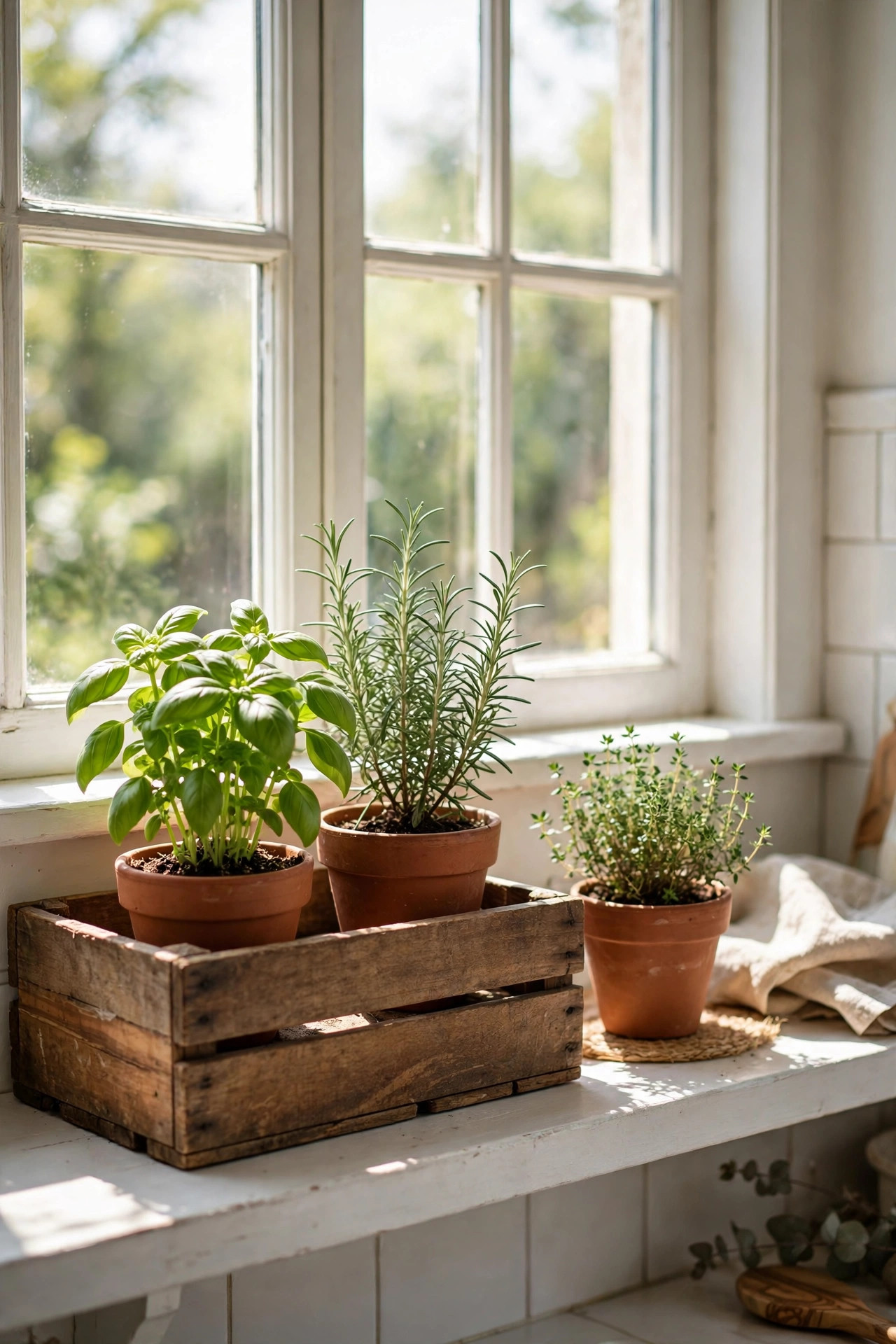
Fresh herbs are the one grocery purchase that always stings. You pay $3.50 for a little plastic clamshell of basil, use four leaves, and find the rest turned to black slime a week later. A packet of seeds costs about the same as that one clamshell — and it can produce fresh basil for months. Growing herbs indoors is one of the highest-return DIY projects there is: tiny upfront cost, daily payoff, and a kitchen that smells incredible.
This indoor herb garden cost $28 total: six terracotta pots, a bag of potting mix, three packets of seeds, a thrifted wooden crate that holds everything on the windowsill, chalkboard labels, and pebbles for drainage. No grow lights, no fancy planters, no gardening experience required. If you have a sunny window and remember to water, you can do this in one afternoon — and be snipping your own basil onto pasta within a month.
Materials You'll Need
- 6 small terracotta pots (4-inch) — $6
- Bag of potting mix (8-quart) — $7
- Herb seed packets: basil, parsley, cilantro — $5
- Wooden crate from the thrift store — $4
- Chalkboard plant labels + marker — $3
- Small bag of pebbles for drainage — $3
Step-by-Step Instructions
- Pick your sunniest spot. Herbs need 6+ hours of direct sun a day, so the south-facing windowsill is the jackpot. No south-facing window? East or west works for forgiving herbs like mint, chives, and parsley. The sill should be wide enough for a crate (about 8 inches deep), and keep pots away from the hot air blast of heating vents, which dries soil shockingly fast.
- Choose beginner-friendly herbs. Basil, parsley, cilantro, mint, and chives are the easy A-team — they germinate fast, forgive mistakes, and get used constantly. Skip rosemary and thyme from seed for now; they're slow starters that frustrate beginners. Three to four varieties is the sweet spot for a first garden: enough variety to feel abundant, not so many that watering becomes a chore.
- Build the crate planter. Thrift-store wooden crates run $3–5 and they're perfect herb garden real estate — they corrall six pots into one tidy footprint and protect the sill from water rings. Line the crate with a sheet of plastic or an old shower curtain liner cut to size, folded up the sides, so condensation never touches your paint.
- Pot with drainage first. Cover each terracotta drainage hole with a piece of broken pottery or a coffee filter, add a one-inch layer of pebbles, then fill with potting mix to about half an inch below the rim. Terracotta is ideal for herbs because the clay breathes — the soil dries out between waterings, which herbs actually prefer to soggy feet.
- Sow or plant your herbs. For seeds: press 3–4 seeds per pot into damp mix at the depth the packet says, then cover loosely. For a faster start, buy two or three small nursery starter plants for the herbs you'll use most (basil especially) and fill the rest from seed — you'll harvest weeks sooner and still stay well under budget.
- Set a watering routine. Check daily with the finger test: if the top inch of soil is dry, water until it runs from the drainage holes, then empty the saucers. Herbs want a soak-and-dry cycle, not constant dampness. A consistent morning watering takes two minutes and is the single biggest factor in whether your garden thrives or sulks.
- Harvest the right way. Start snipping once plants are 6 inches tall — and never take more than a third of the plant at once. Pinch basil from the top just above a leaf pair, and it splits into two stems. Regular harvesting isn't just free food; it's what keeps the plant bushy instead of leggy.
Budget Breakdown
| Item | Cost |
|---|---|
| 6 terracotta pots, 4-inch | $6 |
| Bag of potting mix | $7 |
| 3 herb seed packets | $5 |
| Thrifted wooden crate | $4 |
| Chalkboard labels + marker | $3 |
| Pebbles for drainage | $3 |
| Total | $28 |
Before & After
Before: a bare kitchen windowsill holding one sad, leggy houseplant and a graveyard of empty seed packets from the ambition of 2024. Sunlight poured in every morning with absolutely nothing to show for it.
After: a thrifted wooden crate lined in plastic, holding six terracotta pots of basil, parsley, cilantro, mint, and chives — each with a chalkboard label. The window is now the prettiest spot in the kitchen, and dinner gets better every night it's used.
The surprise star was the crate. It turned six separate pots into one intentional-looking display, caught every drip, and made the whole thing feel like a designed planter rather than a row of random pots. We snipped our first handful of basil four weeks after sowing.
Tips for Your Indoor Herb Garden
- More light beats more fertilizer. Ninety percent of sad indoor herbs are just starved of light. If growth stalls and the windowsill gets less than six hours of sun, move the crate closer to the glass or supplement with a cheap clip-on grow bulb — light is the one input that matters most.
- Don't drown them with love. Overwatering kills more herbs than neglect. The finger test is the whole system: dry top inch means water, damp means walk away. Terracotta wicks moisture through the clay, so the pots themselves will look pale when they're truly dry.
- Rotate the pots weekly. Give each pot a quarter turn every Sunday. Herbs lean toward the window like sunflowers, and rotation keeps growth even and upright instead of one-sided and floppy.
- Harvest often and boldly. Snipping herbs regularly signals the plant to push new growth. If you stop harvesting, basil flowers, gets bitter, and winds down. Pinch flower buds off the moment you see them to keep leaves tender.
- Feed lightly after a month. Potting mix has about a month of nutrition in it. After that, a half-strength liquid fertilizer every two weeks keeps plants vigorous. Full strength on container herbs burns roots, so always dilute.
Frequently Asked Questions
- Can I grow herbs if I don't have a sunny window?
- Yes, but choose your herbs accordingly. Mint, chives, and parsley tolerate four to five hours of indirect light and do fine on east-facing sills. Basil really wants six hours of sun — for it, a clip-on grow light (around $10 at the hardware store) makes a north-facing kitchen perfectly viable.
- Should I start from seeds or buy starter plants?
- Seeds for the long game, starters for instant gratification. Basil, parsley, and cilantro germinate in 7–14 days, so seeds are cheap and easy. If you want to harvest this week, buy two or three starter plants for the herbs you use most and sow the rest from seed — the best of both worlds.
- Why do my herbs keep dying even though I water them?
- Almost always drainage or overwatering. Make sure every pot has a drainage hole, there's a pebble layer at the bottom, and you're letting the top inch of soil dry between waterings. Pots sitting in pooled water rot roots in days — always empty saucers after watering.