No-Sew Thrift Armchair Makeover: $30
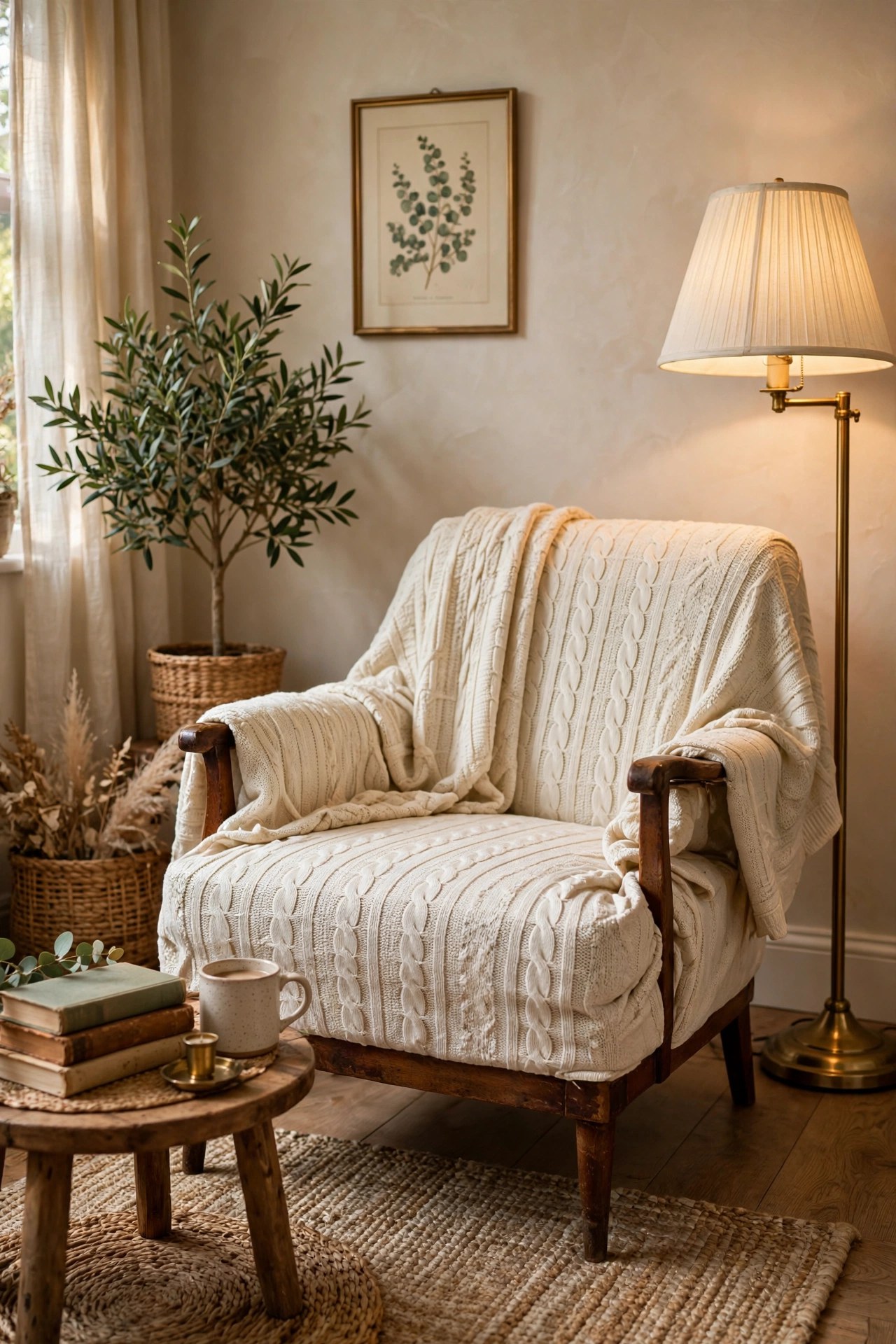
Reupholstering a chair costs $400+. A custom slipcover costs $150+. But a great-looking armchair for $30? That's a thrifted chair with good bones, a textured throw blanket, and a pack of upholstery twist pins — no sewing machine, no staple gun, no skills beyond tucking.
This works because texture hides everything. A nubby, washed, or quilted throw draped with intention reads as relaxed European slipcover style — the look people pay good money for. The key is choosing the right chair (solid frame, decent cushions) and the right throw (big, textured, neutral).
Materials You'll Need
- Thrifted armchair with solid frame and intact cushions — $15
- Large textured throw blanket, 50"×60" or bigger (cream/natural) — $10
- Upholstery twist pins, 20-pack — $5
- Scissors, measuring tape, vacuum with upholstery attachment — on hand / $0
Step-by-Step Instructions
- Pick the right chair. Sit in it. Rock it side to side — the frame should feel rock solid with zero wobble. Check that seat cushions have life left (saggy foam can't be hidden by fabric). Ugly upholstery is fine; broken structure is not.
- Deep clean everything. Vacuum every crevice with the upholstery attachment, then sprinkle baking soda over all fabric, wait an hour, and vacuum again. Thrift store chairs carry other people's dust — start fresh.
- Center the throw. Drape the throw over the chair so it hangs evenly on all sides, with extra length at the front. Stand back and check: the pattern (if any) should be centered, and the drape should look deliberate, not accidental.
- Tuck into every crevice. Using a wooden spoon handle or your fingers, push the fabric deep into the seams where the back meets the seat, the arms meet the seat, and around the cushions. Deep tucks are what make it look tailored instead of just "blanket on a chair."
- Pin it underneath. Flip the excess fabric under the chair and secure it with twist pins pushed up into the frame's underside — they're invisible and hold surprisingly well. Pin the back panel too so it doesn't shift when you lean back.
- Shape and style. Smooth the seat, arrange soft folds on the arms, and let the front drape naturally. Add a lumbar pillow in a contrasting texture. Step back — if any spot looks lumpy, re-tuck; if it looks relaxed and intentional, you're done.
Budget Breakdown
| Item | Cost |
|---|---|
| Thrifted armchair | $15 |
| Textured throw blanket | $10 |
| Upholstery twist pins | $5 |
| Cleaning supplies, tools | $0 (on hand) |
| Total | $30 |
Before & After
Before: a sturdy little armchair in a shiny brown microfiber that had seen better decades — $15 because the fabric was dated, though the frame was hardwood-solid and the cushions still bouncy. It sat in the thrift store for weeks; everyone walked past it.
After: the cream textured throw transformed it into the chair everyone fights over. It looks like relaxed Belgian linen slipcover style — the kind of "undone" that interior designers charge thousands to achieve. It now anchors my reading corner, and nobody believes the total was $30.
The deep tucking was the skill that mattered. My first attempt looked like I'd just tossed a blanket over a chair — because I had. Taking twenty minutes to really work the fabric into every seam changed it from lazy to tailored. Tucking is the tailoring.
Tips for Your Own Chair Flip
- Texture is everything. Nubby, washed, quilted, or waffle-weave throws hide lumps and read expensive; flat thin blankets show every flaw.
- Go oversized on the throw. Too-small fabric pulls and looks skimpy. Bigger is always better — excess gets tucked and pinned out of sight.
- Neutral colors only. Cream, natural, oatmeal, soft grey — they read as intentional slipcover style. Bold patterns tend to read as "covered-up problem."
- Re-tuck monthly. The fabric shifts with use. A two-minute re-tuck keeps it looking sharp — treat it like making the bed.
- Keep a lint roller nearby. Textured throws attract lint and pet hair. Thirty seconds with a roller keeps the chair looking fresh.
Frequently Asked Questions
- Will the throw stay put, or will I be re-tucking daily?
- With deep tucks plus twist pins underneath, it stays put remarkably well — expect a quick re-tuck every few weeks, not daily. The pins are the key; tucks alone will work loose within days.
- Can I wash the throw?
- Yes — that's the beauty of this method versus reupholstery. Unpin, toss the throw in the wash per its care label, and re-drape. Try that with a $400 reupholstery job.
- What chairs should I avoid at the thrift store?
- Skip anything with a wobbly frame, broken springs (you'll feel them), pet odor that survives a sniff test, or cushions so flat they can't be revived. Structure can't be faked; fabric can.