Thrifted Dining Chairs Makeover: $40 Set of 4
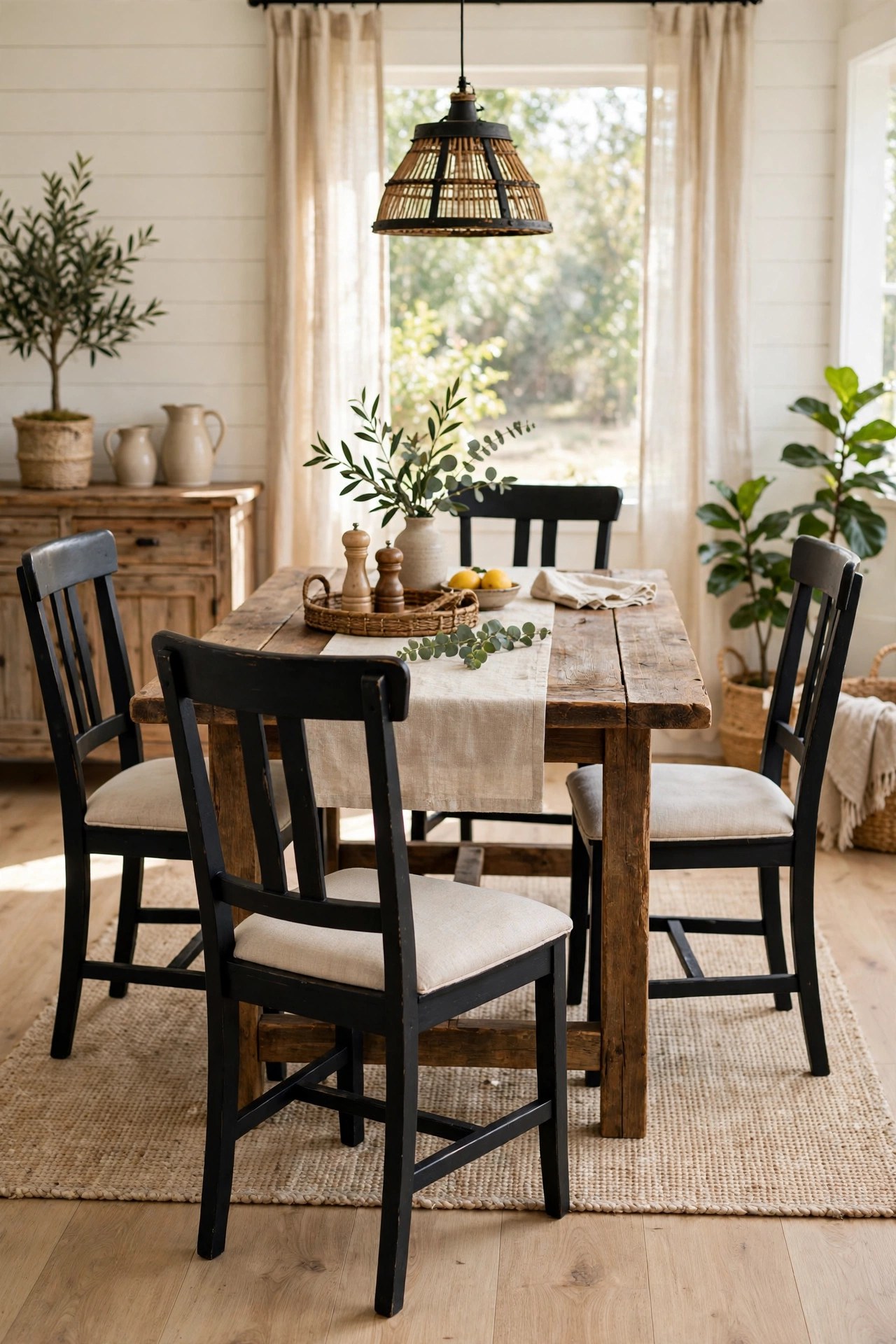
Dining chairs are the thrift store's best-kept secret. Solid wood chairs — the kind that survive decades — sell for $3 to $6 each while their flimsy flat-pack cousins cost $60 new. The catch is always the same: they're ugly. Different finishes, torn vinyl seats, that 1994 country-blue stain. But ugly is just a surface problem, and surfaces are cheap to fix.
This set of four took one weekend and $40. Matte black paint unified four mismatched chairs into a deliberate-looking set, and fresh linen seat covers took them from "garage sale" to "dining room." If your dining area needs seating and your budget needs mercy, start at the thrift store.
Materials You'll Need
- 4 solid-wood dining chairs, thrifted ($4 each) — $16
- 1 quart chalk-style mineral paint, matte black — $15
- Sanding sponges, 2-pack (medium/fine) — $2
- 1 yard clearance upholstery fabric, natural linen-look — $7
- Staple gun + staples, screwdriver — on hand / $0
Step-by-Step Instructions
- Buy bones, not beauty. At the store, sit in every chair and wiggle it hard side to side. Reject anything with cracked legs, wobbly joints that don't tighten, or pressed-wood seats. Solid wood + sturdy joints is all that matters — finish and fabric are getting replaced anyway.
- Degrease everything. Years of furniture polish and kitchen grease live on thrifted chairs. Scrub every surface with a degreasing cleaner and let dry. Paint fails on grease faster than on anything else.
- Remove the seats. Flip each chair and unscrew the seat — most are held by four screws. Set the screws aside in a labeled bag. If seats are plywood in decent shape, you'll reuse them as the base for new upholstery.
- Sand and paint the frames. Scuff-sand with the medium sponge, wipe clean, then apply two thin coats of mineral paint. Thin coats are the whole game with chairs — thick paint pools in spindles and drips on legs. Let cure overnight between coats if you can.
- Reupholster the seats. Lay the fabric face-down, center the old seat (add a layer of batting if the padding is flat — a $5 bag covers four seats), pull the fabric taut, and staple from the center of each side outward. Trim excess and fold corners like wrapping a gift.
- Reassemble and tighten. Screw the seats back on. While you're under there, tighten every joint screw and add a drop of wood glue to any dowel that feels loose. A ten-minute tune-up now prevents wobbles for years.
- Seal the paint. One coat of clear furniture wax or water-based polyurethane on the frames — chairs get handled constantly, and sealer is what keeps the paint from wearing through on edges within a year.
Budget Breakdown
| Item | Cost |
|---|---|
| 4 thrifted wood chairs | $16 |
| Mineral paint, matte black (quart) | $15 |
| Sanding sponges (2-pack) | $2 |
| Upholstery fabric (1 yard, clearance) | $7 |
| Staple gun, screwdriver | $0 (on hand) |
| Total | $40 |
Before & After
Before: four chairs that had clearly never met — one oak, two with peeling black lacquer, one inexplicably pine. Torn vinyl seats in three different decades of style. They looked like the aftermath of four separate estate sales, because they were.
After: a matching set in soft matte black with tailored natural linen seats. They look intentional — like a set someone chose, not a set someone rescued. Around the farmhouse table, nobody would guess the per-chair cost was less than a coffee.
The biggest surprise was the reupholstery. I'd never used a staple gun before and expected a disaster; twenty minutes per seat later I had four that looked professionally done. Fabric is the highest-leverage step in this whole project.
Tips for Your Own Chair Flip
- The wiggle test is everything. Sit, lean, twist. A chair that's solid now will be solid after paint; a chair that's loose now will only get looser.
- Paint chairs upside down first. Flip them to get the undersides and spindles, then flip back for the tops. Gravity is your assistant.
- Buy extra fabric. One yard covers four standard seats, but pattern-matching or mistakes eat fabric fast. Remnant bins are your friend.
- Staple from the middle out. Center of each side first, then work toward corners. This keeps the fabric drum-tight with no puckers.
- Don't skip the sealer. Unsealed chalk paint on chair edges wears to the wood within months of daily use. One sealing coat doubles the lifespan.
Frequently Asked Questions
- Do the chairs need to match before I buy them?
- No — they need to be the same height and roughly the same style family (all ladder-back, all spindle-back, etc.). Paint erases finish differences completely, and matching seat fabric ties them together visually.
- Can I skip sanding if I use chalk paint?
- For the frames, a light scuff-sand is still worth 20 minutes — it gives the paint tooth on old varnish. You don't need to strip to bare wood, just dull the shine.
- What if a chair is wobbly at the store?
- Minor wobble from loose screws is a $0 fix — tighten them. Wobble from cracked wood or stripped dowel holes is a pass. Learn the difference and you'll never buy a dud.