$10 Thrift Nightstand Flip: Bedside Glow-Up
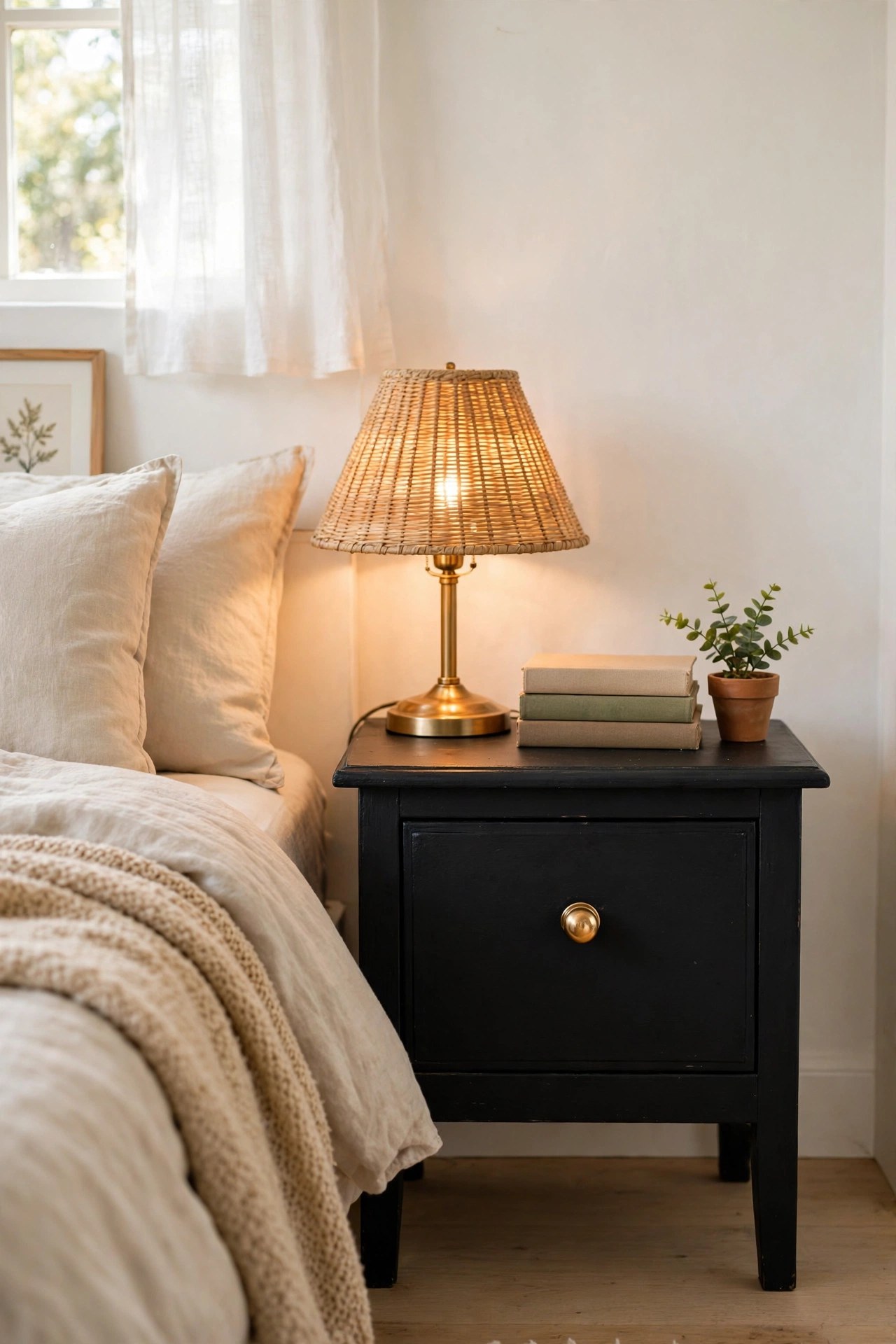
Nightstands are the most overlooked furniture in the bedroom and the easiest thrift flip in existence. They're small (one afternoon of work), they're cheap (thrift stores price them at $5–$15 because nobody wants to carry them), and they sit right at eye level every single morning — so the payoff is wildly disproportionate to the effort.
This one cost $10 and wobbled. A Saturday of sanding and painting, a $6 brass knob, and it now looks like it came from a boutique hotel. Total: $39. If you've never flipped furniture before, start here.
Materials You'll Need
- Wooden nightstand from a thrift store — $10
- 1 quart furniture paint in matte black — $14
- Wood filler — $5
- Sanding sponge (medium/fine) — $4
- Brass drawer knob — $6
- Painter's tape, brushes, rags — on hand / $0
- Screwdriver set — on hand / $0
Step-by-Step Instructions
- Assess and tighten. Flip the nightstand over and tighten every screw and joint. A wobbly $10 table is usually just loose screws, not broken wood. If a joint is truly cracked, a dab of wood glue and an overnight clamp fixes it.
- Remove the hardware and drawer. Take off the old knob or pull and slide the drawer out. Paint goes on cleaner when you're not working around obstacles, and old hardware rarely survives a style upgrade anyway.
- Fill and sand. Press wood filler into dings, scratches, and old hardware holes. Let it dry, then sand the whole piece with the medium sponge followed by the fine one. You're not stripping to bare wood — just scuffing the gloss so paint grips.
- Paint two thin coats. Brush matte black paint in long, even strokes, following the wood grain. Thin coats are everything: thick paint drips, shows brush marks, and takes forever to cure. Let the first coat dry fully (2–3 hours) before the second.
- Install the new knob. Hold the brass knob against the drawer front to check placement, mark it, and drill or screw it in. One beautiful knob is the jewelry of the whole piece — it's a $6 upgrade that reads as $60.
- Let it cure, then style. Give the paint 24 hours before heavy use. Style with a lamp (warm bulb, always), a small stack of books, and one tiny plant. Three items max — a nightstand is a working surface, not a shelf.
Budget Breakdown
| Item | Cost |
|---|---|
| Thrifted nightstand | $10 |
| Furniture paint, matte black (quart) | $14 |
| Wood filler | $5 |
| Sanding sponge | $4 |
| Brass drawer knob | $6 |
| Tape, brushes, rags | $0 (on hand) |
| Screwdriver set | $0 (on hand) |
| Total | $39 |
Before & After
Before: a scratched honey-pine nightstand with a missing knob, a wobbly leg, and that sticky feeling old varnish gets. It had been marked down twice to $10. The thrift store staff looked relieved when someone finally took it.
After: matte black with a single brass knob, sitting beside the bed like it was designed for the room. The black makes the bedding look crisper and the lamp glow warmer. It's the smallest piece of furniture in the bedroom and somehow the one people comment on.
The knob was the revelation. I almost reused a spare knob from a drawer to save $6, and I'm glad I didn't — the brass against matte black is the entire look. Never cheap out on the one piece of hardware everyone touches.
Tips for Your Own Nightstand Flip
- Check drawer function before buying. Drawers that stick can be fixed with wax, but drawers with broken tracks or missing sides are rarely worth the trouble.
- Matte black hides everything. Scratches, mismatched wood, old stains — black paint is the most forgiving finish for beginner flippers.
- Measure the knob hole spacing before buying new hardware. A single-hole knob fits anywhere; a two-hole pull must match the existing holes or you'll be drilling and filling.
- Paint the drawer interior too — or at least the front edge. An unpainted interior flashing raw wood every time you open the drawer ruins the illusion.
- Buy nightstands in pairs when you can. Matching $10 nightstands are rare, but a mismatched pair painted the same color with the same knobs looks intentional and collected.
Frequently Asked Questions
- Do I need to prime before painting?
- With modern furniture paint over a scuff-sanded surface, usually not — most are self-priming. But if you're covering a very dark stain with a light color, or the wood is knotty pine, a coat of shellac-based primer prevents bleed-through and saves you a third coat of paint.
- How do I fix a wobbly nightstand?
- Nine times out of ten it's loose joinery, not broken wood. Tighten all screws, add wood glue to any loose dowel joints, and check that the legs are even (a wobbly table on a flat floor has a short leg — a felt pad fixes it).
- Will the paint chip with daily use?
- Not if you prepped and let it cure. The biggest mistake is using the piece too soon — paint feels dry in hours but needs days to fully harden. Give it a week of gentle use before treating it like normal furniture.