Pantry Makeover & Organization Under $75
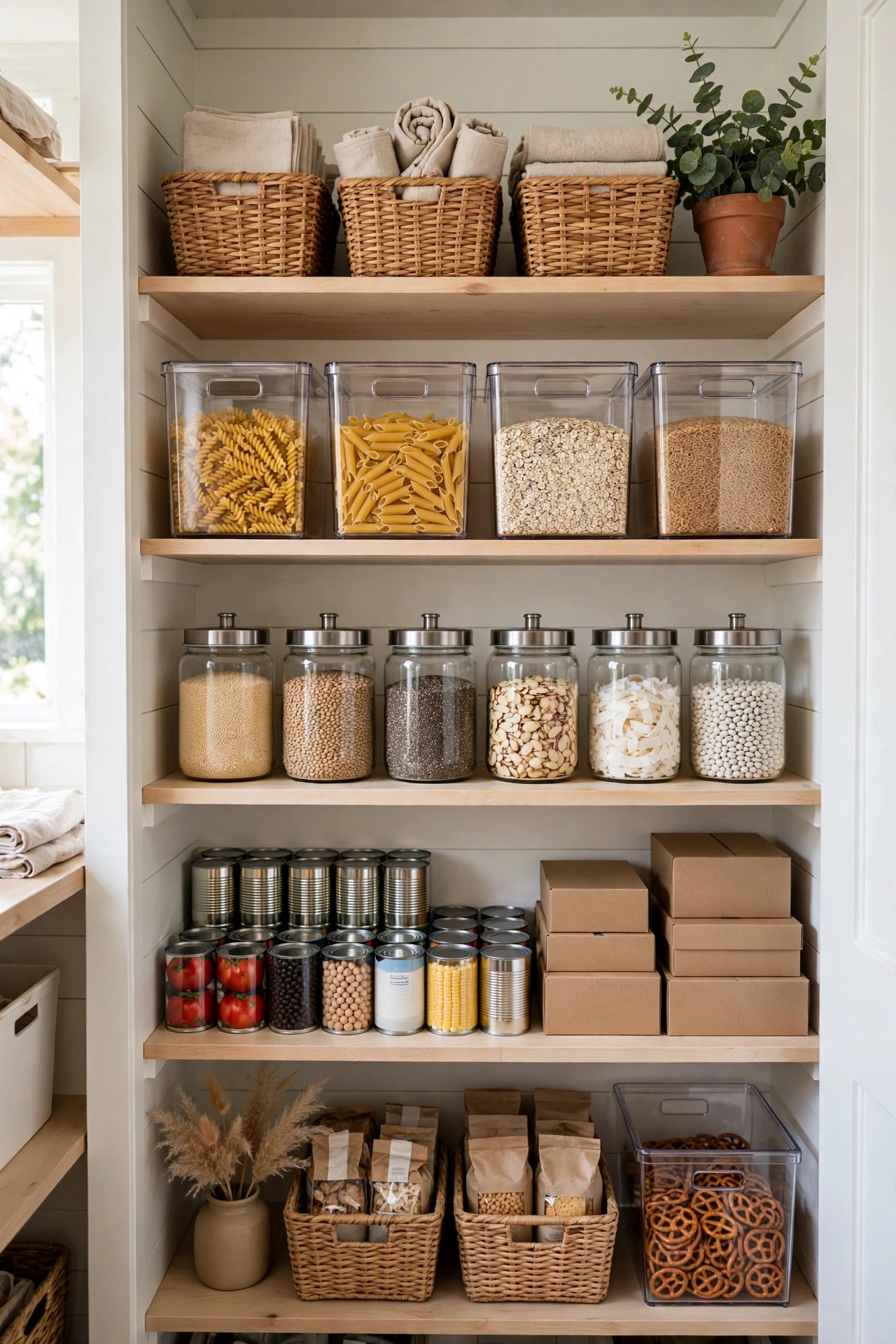
Our pantry was where food went to be forgotten. Cans migrated to the back and expired, half-open bags spilled everywhere, and we regularly bought duplicates of things we already owned because we couldn't see what we had. The average household wastes hundreds of dollars a year on spoiled and duplicated groceries — and a chaotic pantry is where most of it happens.
This makeover took one Sunday and $67: matching bins, baskets, jars, and labels. No new shelving, no renovation — just a system. Six months later it's still organized, which is the real miracle. Here's the declutter-first method that makes it stick.
Materials You'll Need
- 6 clear stackable bins — $22
- 4 woven baskets — $18
- 6 glass jars with airtight lids — $16
- Chalk labels + chalk marker — $5
- Shelf liner roll — $6
- Trash bags, cleaning spray, rags — on hand / $0
Step-by-Step Instructions
- Empty everything. Take every single item out of the pantry and put it on the counter or table. Yes, everything — this is the step everyone wants to skip, and it's the reason most pantry "organizing" fails within a month. You can't organize what you can't see.
- Declutter ruthlessly. Check every expiration date. Toss the expired, donate the unexpired-but-never-going-to-eat-it. Be honest about the specialty ingredients from that one recipe in 2023. Most pantries lose 20-30% of their contents here — that's 20-30% less to organize.
- Clean and line the shelves. Wipe down every shelf — you'll be horrified, that's normal. Lay shelf liner for a clean look and easy future wipe-downs. This takes 20 minutes and makes everything that follows look intentional.
- Decant dry goods into jars. Pour flour, sugar, rice, pasta, and snacks from ugly torn bags into the glass jars. Airtight jars keep food fresher longer (saving real money), and uniform jars are 80% of the "Pinterest pantry" look. Label each jar immediately — mystery jars get ignored.
- Zone with bins and baskets. Group like with like: baking in one bin, snacks in another, canned goods in a third. Put the woven baskets on the lowest shelves for bulky items (potatoes, onions, bread). Every category gets a home, and every home gets a label.
- Label everything and set the rules. Chalk-label every bin and basket. Then establish the two household rules that keep it working: everything returns to its labeled home, and new groceries get decanted before they go on the shelf. The system only survives if everyone follows it.
Budget Breakdown
| Item | Cost |
|---|---|
| Clear stackable bins (6) | $22 |
| Woven baskets (4) | $18 |
| Glass jars with lids (6) | $16 |
| Chalk labels + marker | $5 |
| Shelf liner roll | $6 |
| Cleaning supplies | $0 (on hand) |
| Total | $67 |
Before & After
Before: shelves crammed with leaning boxes, bags clipped shut with chip clips, cans in no discernible order, and a fine layer of flour dust over everything. Finding the baking powder required moving eleven things. We once found three open bags of the same rice. It wasn't dirty, exactly — it was just entropy made visible.
After: every shelf has a job now. Jars in a row like a little grocery store, bins with chalk labels, baskets hiding the ugly-but-necessary stuff. Opening the pantry door genuinely sparks joy — and grocery shopping got faster because the "do we have this?" question answers itself at a glance.
The biggest surprise was the money. In the first month we stopped buying duplicates and actually used up what we had — easily $30-40 saved on groceries. The $67 paid for itself in under two months. An organized pantry isn't just pretty; it's profitable.
Tips for Your Own Pantry Organization
- Declutter before you buy a single bin. Measure your actual categories after purging, not before. Most people overbuy containers because they plan for the chaos instead of the edited reality.
- Clear bins beat pretty opaque ones. You need to see contents at a glance or you'll stop trusting the system. Save the woven baskets for the categories where you know what's inside (snacks, bread).
- Decant only what you use regularly. Don't jar the specialty flour you touch twice a year. Jars earn their keep on high-turnover staples: rice, pasta, oats, sugar, flour, coffee.
- Put everyday items at eye level. Prime shelf real estate goes to daily cooking ingredients. Top shelves are for backstock, bottom for bulky/heavy. Design for your actual reach.
- Chalk labels, not permanent ones. Your categories will evolve. Chalk wipes off and rewrites in seconds; printed labels become lies within a month.
Frequently Asked Questions
- How do I keep it organized long-term?
- Two rules: everything has a labeled home, and new groceries get put away properly before the bags hit the recycling. Do a 10-minute reset monthly — pull anything expired, wipe a shelf, relabel as needed. Systems fail from neglect, not from bad design.
- Is decanting really worth the effort?
- For staples, yes — airtight jars keep dry goods fresher noticeably longer, which saves money on spoilage. For rarely used items, no — leave them in original packaging. Decant strategically, not religiously.
- My pantry is tiny. Will this work?
- Small pantries benefit the most — every inch matters more. Use stackable bins to exploit vertical space, door-mounted racks if you have them, and be extra ruthless in the declutter step. A small organized pantry beats a large chaotic one every time.