Budget Table Centerpiece Ideas: $20
A dining table without a centerpiece feels like a room with the lights half on — everything's there, but nothing pulls it together. Florists charge $75+ for a single arrangement that lasts a week, and faux stems good enough to fool anyone cost a fortune. The secret the pros use: it's not the flowers that cost money, it's the vessels and the styling around them.
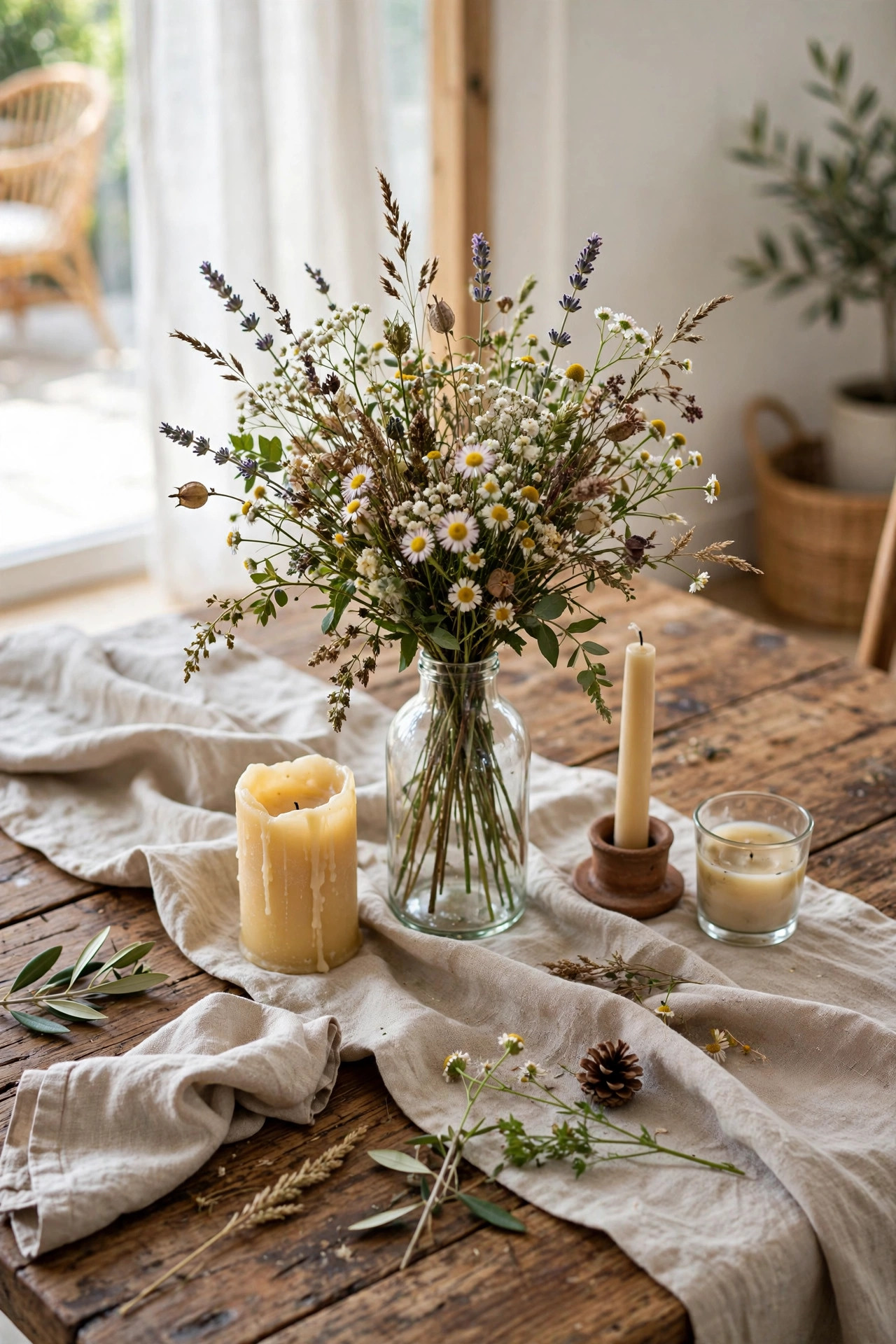
This centerpiece cost $20 total: five thrifted glass bottles, two bunches of grocery-store flowers, a linen runner, and a pair of taper candles. The whole trick is the formula — runner first, vessels in odd numbers, flowers kept low and loose, candles for height. Learn it once and you'll restyle the table for every season and every dinner party for almost nothing.
Materials You'll Need
- Thrifted glass bottles and bud vases (5–6) — $3
- Grocery-store flowers (2 bunches) — $8
- Linen table runner — $5
- Pair of taper candles — $4
Step-by-Step Instructions
- Pick one color story. Before you buy anything, decide the palette: white and green is the safest year-round choice, blush and cream for spring, amber and rust for fall. Every decision after this — flowers, candles, runner — gets filtered through the palette, which is what makes a $20 arrangement look designed instead of random.
- Thrift the vessels. Glass bottles, bud vases, small jars, even old olive oil bottles — $0.50 to $1 each at the thrift store. Grab five or six in mixed heights within your color story (clear, green, or amber glass all work). Odd numbers and varied heights are the entire visual interest, so embrace the mismatch.
- Lay the runner first. A runner is the foundation that turns scattered objects into a composition. Center it lengthwise, letting it overhang each end by about 6 inches. Linen or linen-look cotton in a neutral tone works with everything and hides wrinkles as a feature, not a flaw.
- Cluster the bottles in a loose line. Arrange your vessels down the center of the runner in a loose, slightly zigzag line — never a rigid row. Tallest in the middle, tapering down at the ends. Leave breathing room between them; the negative space is what keeps a multi-bottle centerpiece from looking cluttered.
- Fill with grocery-store flowers. Two bunches from the grocery store — about $8 — is plenty when spread across five bottles. Strip all leaves that would sit below the waterline, cut stems at an angle, and keep arrangements low and loose: 3–5 stems per bottle, varying heights. One hero flower per bottle plus filler greens is the florist's formula.
- Add the foraged freebies. Walk the yard or the neighborhood (with permission) for free filler: eucalyptus trimmings, interesting branches, dried grasses, even weeds with good structure. Foraged greenery is what makes arrangements look expensive and abundant, and it costs literally nothing.
- Bring in the candlelight. Tuck the pair of taper candles into the composition in their own small holders, slightly off-center. Candles add the vertical interest flowers can't, and at dinner they do what no flower arrangement can: they make the whole table glow. Light them last, right before guests sit down.
Budget Breakdown
| Item | Cost |
|---|---|
| Thrifted bottles and bud vases (5–6) | $3 |
| Grocery-store flowers, 2 bunches | $8 |
| Linen table runner | $5 |
| Pair of taper candles | $4 |
| Total | $20 |
Before & After
Before: a perfectly good dining table that sat bare between meals — nice wood, nice chairs, and the visual warmth of a conference room. Dinner parties meant scrambling for something, anything, to put in the middle.
After: a linen runner with five thrifted bottles in a loose zigzag, filled with white grocery-store blooms and foraged greenery, plus two taper candles. The table looks styled every single day, not just on holidays — and refreshing the flowers costs $8 a week or less.
The runner changed everything. The bottles and flowers alone looked nice; on the linen runner they looked intentional. It's the difference between objects on a table and a centerpiece — and the runner was the cheapest element of the whole thing.
Tips for Your Table Centerpieces
- Keep flowers below eye level. The number-one centerpiece mistake is an arrangement so tall guests can't see each other. Keep blooms under 12 inches so conversation flows across the table — candles can go taller since they're thin and don't block sightlines.
- Odd numbers, always. Three, five, or seven vessels grouped together reads as styled; even numbers read as pairs and look stiff. This rule applies to candles, bottles, and pumpkins alike — trust the odd numbers.
- Change the water, not the flowers. Grocery-store flowers last 7–10 days if you change the water every two days and re-trim the stems. The flowers are the recurring cost, so stretching each bunch to ten days cuts your yearly flower spend in half.
- One palette, many seasons. Keep the runner, bottles, and candles year-round and only swap the flowers and foraged bits. Spring tulips, summer wildflowers, fall branches, winter evergreens — the $20 foundation works all year, and seasonal refreshes cost under $10.
- Strip every leaf below the waterline. Leaves sitting in water rot and turn the water murky within a day. Stripping them takes two minutes per bunch and is the single biggest factor in how long your arrangement looks fresh.
Frequently Asked Questions
- How do I make grocery-store flowers look expensive?
- It's all in the prep: strip lower leaves, cut stems at a sharp angle, and arrange loosely in small groups rather than one big bunch. Spread two bunches across five small vessels instead of cramming them in one vase, add foraged greenery for fullness, and keep the palette to one or two colors — suddenly it's a florist look.
- What if my table is too narrow for a big centerpiece?
- Go linear instead of wide: a runner with a single file of bud vases takes up almost no width but still styles the whole table. Or use one low bowl arrangement in the center. The formula works at any scale — runner, odd-numbered vessels, low flowers, candlelight.
- How often do I need to replace the flowers?
- Every 7–10 days with good water care — change the water every two days and re-trim stems. The runner, bottles, and candles are a one-time $12 investment; only the $8 of flowers recurs. Between refreshes, foraged branches or dried grasses fill the gap for free.