DIY Roman Shades on a Budget: $44
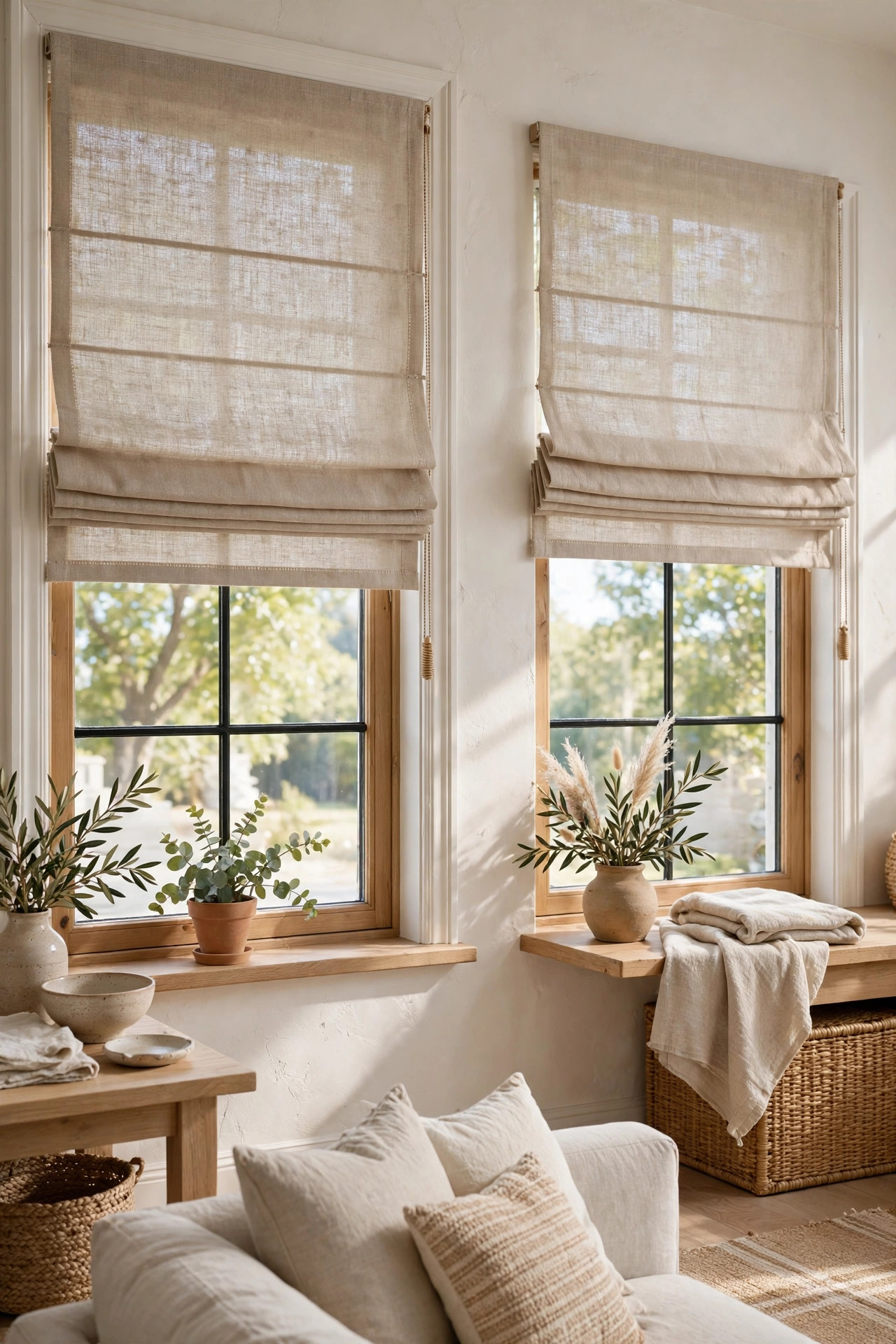
Custom window treatments are one of the great budget-busters of home decor. A single made-to-measure roman shade can run $150 to $300, and most rooms have more than one window. But a roman shade is, mechanically speaking, a rectangle of fabric that folds up in neat pleats — there's no reason it should cost as much as a piece of furniture. The secret is a hardware hack that's been floating around DIY circles for years: the guts of a cheap mini blind become the lift mechanism for a custom shade.
This project costs $44 per window: two yards of fabric, a basic mini blind for its hardware, no-sew hem tape instead of a sewing machine, and dowels with ring clips for the fold lines. The result raises and lowers like a real shade, folds into crisp pleats, and looks custom because — well — it is. Fabric choice is the whole design, so pick something you love and the window practically styles itself.
Materials You'll Need
- Fabric, 2 yards (flat-weave cotton or linen-look) — $20
- Basic mini blind, window width (for hardware) — $10
- No-sew fusible hem tape — $8
- Dowels, ring clips, and lift cord — $6
Step-by-Step Instructions
- Measure the window twice, cut once. For an inside mount, measure the window opening's width in three places and use the narrowest number, then subtract a quarter inch for clearance. Length is the opening height plus 8 inches (4 for the top mounting pocket, 4 for the bottom hem). For an outside mount, add 3 inches to each side and 4 inches top and bottom. Write the numbers down — fabric mistakes are the expensive kind.
- Cut the fabric with clean edges. Press the fabric first; wrinkles lie about measurements. Mark your width and length with a fabric pencil, using a carpenter's square or the selvage edge to keep corners true. Cut with sharp scissors or a rotary cutter. Flat-weave fabrics without stretch — cotton duck, linen-look blends — fold the crispest and are the most forgiving for beginners.
- Hem the sides with no-sew tape. Fold each side edge under by one inch, press it, and sandwich fusible hem tape inside the fold. Iron according to the tape's directions (usually medium heat, 10 seconds per section) until it bonds. This is the no-sewing-machine workaround, and it's genuinely strong — hem tape is used in garment alterations, so it holds up to daily raising and lowering.
- Create the fold pockets. A roman shade folds at even intervals — every 7 to 8 inches is classic. Mark horizontal lines across the back of the fabric at your chosen interval, fold the fabric back on itself along each line, and fuse a narrow pocket with hem tape. Slide a wooden dowel into each pocket; the dowels are what force the fabric into straight, even pleats instead of sagging curves.
- Harvest the mini blind hardware. Buy the cheapest corded mini blind that matches your window width, then carefully cut away and discard the slats, keeping the headrail, the lift cords, and the bottom rail intact. This is the entire hack: the headrail's cord-lock mechanism and pulleys become your shade's lifting system for a tenth of the cost of purpose-built roman shade hardware.
- Attach the fabric to the hardware. Glue or staple the top of the fabric around the mini blind's headrail, covering it completely. Thread the blind's existing lift cords down through the ring clips sewn or glued at each dowel pocket — the rings should line up in straight vertical columns. Tie the cord ends to the bottom rail or the lowest dowel. Pull the cords and watch the shade gather into pleats: that's the moment it becomes real.
- Mount and train the folds. Mount the headrail inside the window frame with the blind's original brackets. Raise the shade fully and leave it up for 24 hours — this "trains" the fabric to remember its pleats. Then lower it slowly, nudging each fold into place with your hands. The first few cycles need a little guidance; after that, the dowels and the trained creases do the work on their own.
Budget Breakdown
| Item | Cost |
|---|---|
| Fabric, 2 yards | $20 |
| Mini blind (hardware donor) | $10 |
| No-sew fusible hem tape | $8 |
| Dowels, ring clips, and lift cord | $6 |
| Total | $44 |
Before & After
Before: bare bedroom windows with nothing but the landlord's tired vertical blinds — the kind that clatter in the breeze and collect dust in every slat. The room felt unfinished and a little institutional, and morning light arrived all at once with no way to soften it.
After: tailored roman shades in a natural linen-look weave, mounted inside the frames, folding into crisp horizontal pleats. The fabric softens the light and warms the whole room; raised, the shades stack into a neat tailored valance; lowered, they're a clean flat panel. It looks like a designer's window treatment because the proportions are right, not because it was expensive.
The mini-blind hack is what makes the budget work. Purpose-built roman shade kits start around $40 for the hardware alone — the $10 blind donates the exact same cord-lock and pulley system. And choosing a flat-weave fabric was the difference between crisp pleats and a floppy mess on the first attempt (ask us how we know).
Tips for Your Own Roman Shades
- Choose flat-weave, medium-weight fabric. Quilting cotton is too thin and sags; upholstery fabric is too thick to pleat. A cotton duck or linen-look drapery fabric in the middle is the sweet spot — it holds a crease and hangs straight.
- Iron everything twice. Press the fabric before cutting, press every fold before fusing, and press the finished shade before hanging. Roman shades are 90% pressing and 10% everything else — crispness comes from the iron, not the hardware.
- Keep cords safe. Loose lift cords are a real hazard for kids and pets. Use a cord cleat mounted high on the window frame to wrap excess cord, or choose a cordless mini blind as your hardware donor if your budget stretches a few dollars more.
- Line it if the room needs darkness. A layer of inexpensive blackout lining fused to the back of the fabric turns these into genuine bedroom shades. It adds about $8 per window and one extra fusing step — worth it for sleep.
- Make all the windows match. Roman shades look best as a set. Buy all your fabric from the same bolt at once so the dye lot matches, and build every window in the room before declaring victory — one finished window next to three bare ones just highlights the bare ones.
Frequently Asked Questions
- Do I really not need a sewing machine?
- Really. Fusible hem tape creates a permanent bond that's strong enough for a shade's daily use — it's the same product used for hemming pants. Press it properly (full heat, full time, no steam unless the package says so) and the hems will outlast the fabric's fashion cycle.
- Will the pleats stay even over time?
- Yes, if you train them. Leaving the shade fully raised for the first 24 hours sets the creases, and the dowels in each pocket keep every fold straight. If a fold ever goes rogue, lower the shade slowly and guide it back into place by hand — it re-learns quickly.
- Can I use this method for a very wide window?
- Up to about 48 inches wide works well with a single mini blind's hardware. For wider windows, split the treatment into two shades side by side — it looks intentional (designers do this on purpose) and keeps the cord mechanics reliable instead of strained.