Painted Stair Runner: $45 Hallway Upgrade
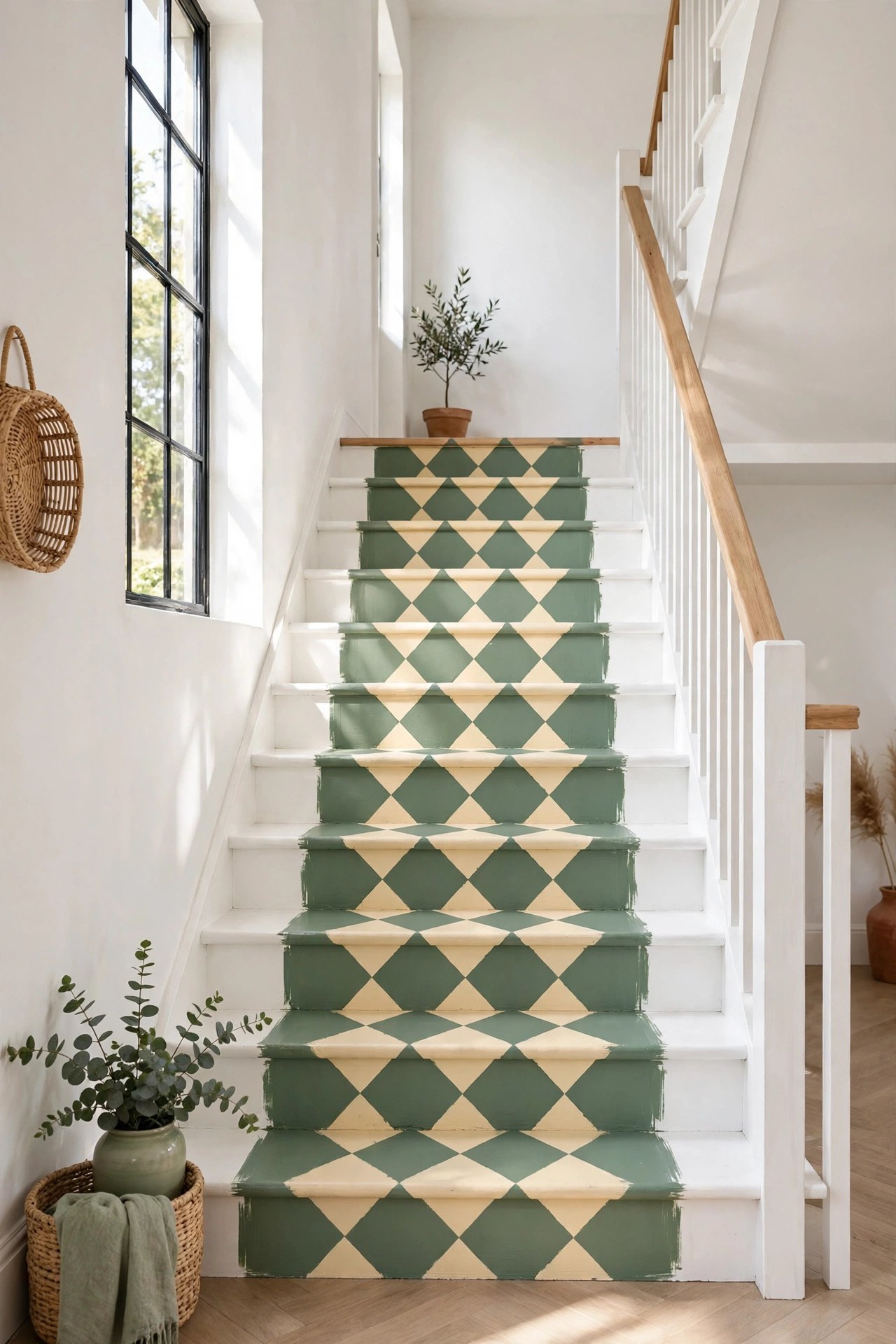
A carpet stair runner costs $300–500 installed. A painted one costs $45, takes a weekend, never needs vacuuming, and looks like a custom design choice rather than a budget compromise. Stairs are also the most-seen, least-decorated surface in most homes — everyone walks them, nobody styles them.
The secret is using proper porch-and-floor paint (it's formulated for foot traffic) and a simple geometric pattern that looks intentional even with slightly imperfect lines. Diamonds are the sweet spot: bold enough to read as design, simple enough to tape.
Materials You'll Need
- Porch & floor paint, quart — sage green — $16
- Porch & floor paint, quart — warm white — $16
- Painter's tape, 1.5" wide — $7
- Small foam roller + 2" angled brush — $6
- Sandpaper (120-grit), tack cloth, drop cloths — on hand / $0
Step-by-Step Instructions
- Clean and sand the stairs. Vacuum thoroughly, then lightly sand every tread and riser with 120-grit paper to give the paint grip. Wipe with a tack cloth. If your stairs are carpeted, this project starts with pulling the carpet — patch any staple holes with wood filler first.
- Paint the base coat. Roll two coats of the warm white porch paint over all treads and risers, letting each dry fully. This is your background color and the "grout line" of the diamond pattern — take your time for even coverage.
- Mark the runner boundaries. Measure in 4 inches from each side of every tread and snap a chalk line (or tape line) down the full staircase. This border frames the runner and hides any wobbles in your pattern edges.
- Tape the diamond pattern. Starting at the top step, tape diagonal lines to form diamonds roughly 8 inches tall, working down the staircase. Use a cardboard diamond template to keep them consistent. Press every tape edge down hard with a credit card — paint bleed is the enemy.
- Paint the diamonds. Roll the sage green inside the taped diamonds with the foam roller — two thin coats. Seal the tape edges first by brushing a thin coat of the white base over the tape lines; it fills any gaps so the green can't bleed under.
- Pull tape and touch up. Remove the tape while the final coat is still slightly tacky, pulling at a 45-degree angle for the crispest lines. Touch up any bleeds with a small artist's brush and the base white.
- Let it cure — really cure it. Dry to walk on in socks after 24 hours, but porch paint needs a full 5–7 days to harden for shoe traffic. Plan the project for a week you can use another staircase, or embrace the sock life temporarily.
Budget Breakdown
| Item | Cost |
|---|---|
| Porch & floor paint, sage (quart) | $16 |
| Porch & floor paint, white (quart) | $16 |
| Painter's tape, 1.5" | $7 |
| Foam roller + angled brush | $6 |
| Sandpaper, tack cloth | $0 (on hand) |
| Total | $45 |
Before & After
Before: scuffed builder-grade stairs in a sad off-white, with the paint worn thin on every tread edge. The hallway was a pass-through — nobody looked at it, nobody photographed it, it just connected the floors.
After: the sage-and-cream diamonds turn the staircase into the hallway's focal point. It reads as a deliberate design moment, like something from a boutique hotel. Visitors now stop on the stairs to look at them, which is a sentence I never expected to type.
The white-base-seals-the-tape trick was the game changer. On my first attempt at a patterned floor years ago, I had bleed everywhere and spent hours touching up. This time: crisp lines, almost zero touch-ups. Seal your tape edges with the base color first — always.
Tips for Your Own Painted Runner
- Use porch & floor paint, not wall paint. Wall paint will scuff and peel under foot traffic within weeks. Floor paint is non-negotiable here.
- Seal tape edges with the base coat before painting the pattern color — this one trick eliminates 95% of paint bleed.
- Keep the pattern simple. Diamonds, stripes, or a border read as high-end; intricate stencils on stairs tend to look busy and show every flaw.
- Work top to bottom so you're never stepping on wet paint to reach the next step. Plan your exit — paint yourself into the top, not the bottom.
- Respect the cure time. A week of socks feels long, but rushing shoe traffic onto uncured paint will scuff months of life off the finish.
Frequently Asked Questions
- Will painted stairs be slippery?
- Porch and floor paint has more grip than you'd expect, but you can add fine slip-resistant additive to the final coat for extra traction. Avoid high-gloss finishes — satin gives the best balance of looks and grip.
- How durable is a painted stair runner really?
- With proper floor paint and full cure time, expect 3–5 years of good looks in a normal household. High-traffic homes may see wear on tread edges sooner — keep leftover paint for easy touch-ups, which take minutes.
- Can I do this over stained wood stairs?
- Yes, with a bonding primer first. Sand lightly, apply one coat of bonding primer, then proceed with the base coat. The primer is the difference between paint that lasts years and paint that chips in months on varnished wood.