Peel-and-Stick Wallpaper Bedroom Refresh Under $90
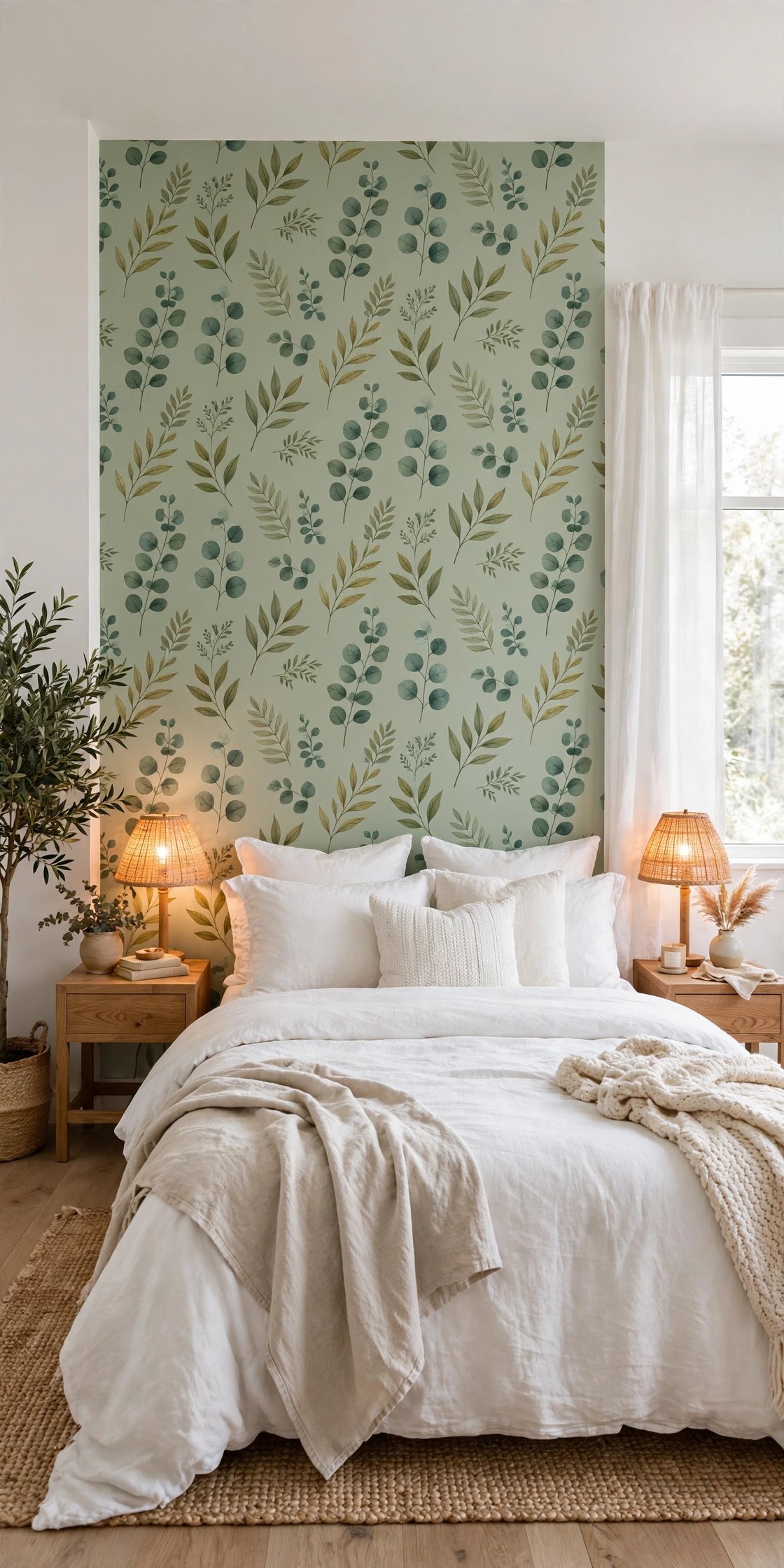
Our bedroom was the last room we touched because, honestly, we only slept in it. White walls, a bed, a nightstand — functional and completely forgettable. But you spend a third of your life in your bedroom, and waking up in a room with some personality genuinely changes your mornings. The problem was commitment: real wallpaper is expensive and permanent, and painting felt like more of the same.
Peel-and-stick wallpaper solved it. One accent wall behind the bed, one Saturday afternoon, $85 total — and it's fully removable, so renters can play too. If you've been scared of wallpaper, this is the training-wheels version, and it looks anything but temporary.
Materials You'll Need
- 2 rolls peel-and-stick wallpaper, botanical print — $56
- Wallpaper smoothing tool — $5
- Utility knife + extra blades — $6
- 2 throw pillow covers — $12
- Small potted plant — $6
- Level, measuring tape, pencil — on hand / $0
Step-by-Step Instructions
- Measure and plan. Measure your accent wall's width and height. Most peel-and-stick rolls are 20.5 inches wide — divide wall width by roll width to get your strip count, and add one extra strip for mistakes. Mark a level vertical line for your first strip; walls are never as straight as they look.
- Prep the wall. Wipe the wall with a damp cloth and let it dry fully. Peel-and-stick adhesive bonds best to clean, smooth, matte or eggshell paint. If your wall is heavily textured, this project isn't for you — the paper won't grip properly.
- Hang the first strip. Peel back about 12 inches of backing, align the paper's edge with your level line at the top, and smooth downward with your hand. Then peel more backing and keep smoothing — never peel the whole strip at once or it will stick to itself. Use the smoothing tool from center outward to push out air bubbles.
- Match the pattern. Line up each new strip with the previous one's pattern before sticking. Most botanical prints have a pattern repeat marked on the roll — follow it. Overlap edges by a hair rather than leaving gaps; butt joints show wall color through them.
- Trim top and bottom. Once a strip is up, run the utility knife along the ceiling line and baseboard with a fresh blade, using the smoothing tool as a straightedge. Change blades often — a dull blade tears the paper instead of cutting it.
- Style the bed to match. Swap in the new pillow covers, pulling one color from the wallpaper pattern. Add the plant to the nightstand. The wallpaper is the star; everything else just needs to not fight it.
Budget Breakdown
| Item | Cost |
|---|---|
| Peel-and-stick wallpaper (2 rolls) | $56 |
| Smoothing tool | $5 |
| Utility knife + blades | $6 |
| Throw pillow covers (2) | $12 |
| Small potted plant | $6 |
| Level, tape, pencil | $0 (on hand) |
| Total | $85 |
Before & After
Before: four white walls, a bed pushed against one of them, and the distinct feeling of sleeping in a very clean waiting room. We'd hung one small print years ago and called it decorated. It was restful in the way an empty parking lot is restful — technically calm, spiritually nothing.
After: the botanical wall behind the bed makes the whole room feel designed around it. The sage greens in the print pull the bedding and plant together, and the pattern gives the eye somewhere to land. It genuinely feels like a boutique hotel room now — the kind you'd photograph.
The biggest surprise was how forgiving the material is. I misaligned one strip badly, peeled the whole thing off, and rehung it — no damage, no stretched paper, no evidence. That repositionability is what makes this a beginner project instead of a gamble.
Tips for Your Own Wallpaper Accent Wall
- Start on the least visible wall section. Your first strip will be your worst. Begin in a corner or behind furniture where learning-curve wobbles hide.
- Buy 10% more than you measure. Pattern matching eats paper, and one ruined strip shouldn't end your project. Unopened rolls can usually be returned.
- Work in a cool room. Heat makes the adhesive extra tacky and harder to reposition. If the paper fights you, it's probably too warm.
- Change utility blades constantly. A fresh blade every few cuts is the difference between crisp edges and ragged tears. Blades are cheap; ruined wallpaper isn't.
- Pull one color from the print for textiles. Matching your pillows or throw to a secondary color in the wallpaper is what makes it look professionally designed.
Frequently Asked Questions
- Will it damage my walls when removed?
- On properly primed and painted drywall, no — that's the whole point. Peel slowly at a sharp angle. On fresh paint (under 30 days cured) or flat/matte builder paint, test a hidden spot first, as the adhesive can pull weak paint.
- Can I use it in a humid room?
- Bedrooms and living rooms are ideal. Bathrooms are risky — steam weakens the adhesive over time. If you must, keep it away from the shower and ensure good ventilation.
- What if my walls are textured?
- Light orange-peel texture is usually fine, but heavy knockdown or popcorn texture will prevent proper adhesion and telegraph through the paper. Smooth or lightly textured walls only for this project.