Thrifted Vase & Decor Styling: $22
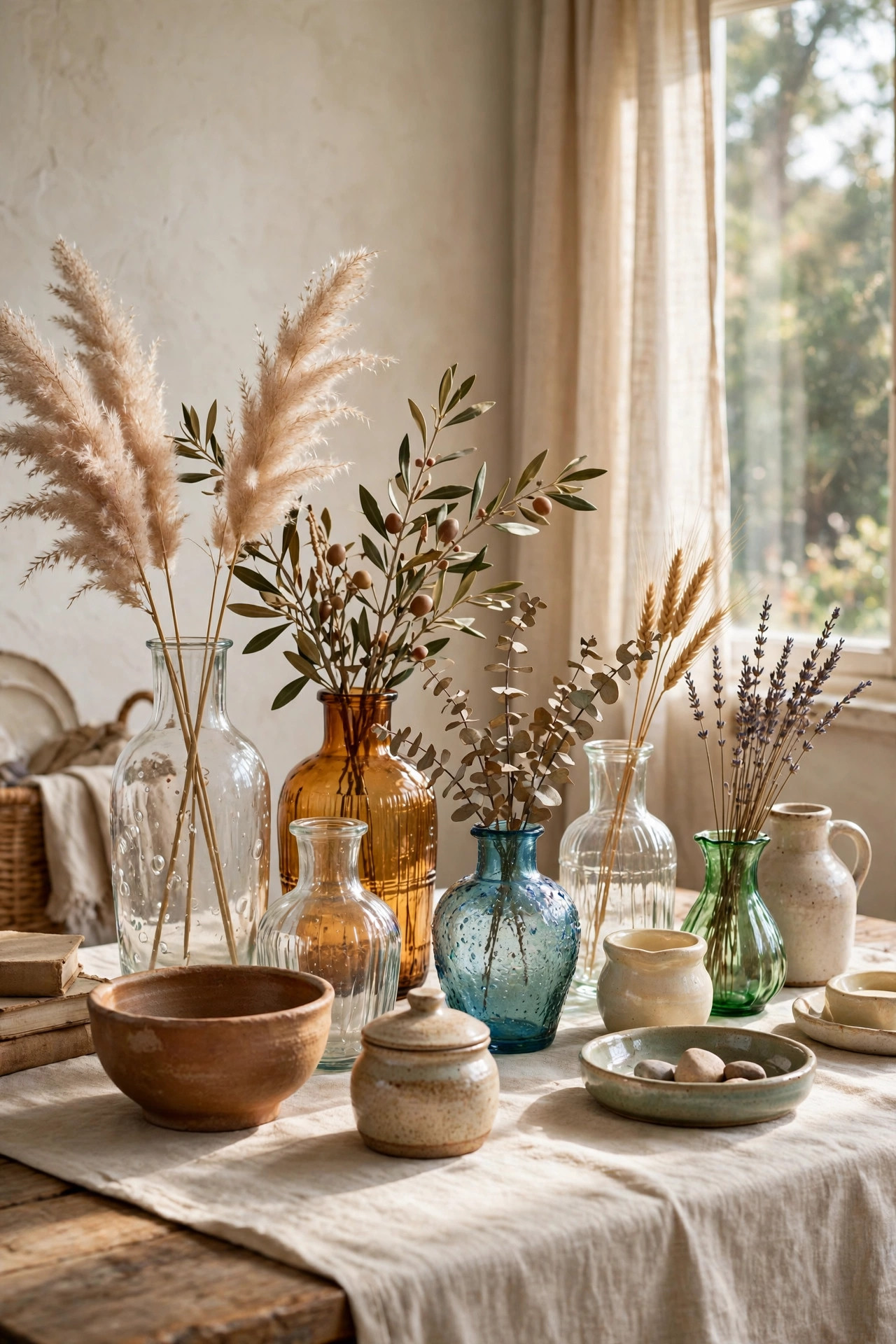
Walk the housewares aisle of any thrift store and you'll find a small forest of glass vases: shiny, dated, and priced at two to four dollars each. Most shoppers walk right past them. But a vase is just a shape — and shapes are timeless. That dusty amber vase with the awkward floral etching becomes a matte ceramic-look stunner with ten minutes and a paint trick, and a cluster of five or six thrifted pieces styled together reads like a boutique display.
This project cost $22: five vases from two thrift stores, a sample pot of paint plus baking soda for the faux-ceramic finish, and a bunch of dried stems. No sewing, no power tools, no talent required — just a good eye for shapes and the discipline to group them like a designer instead of scattering them like souvenirs.
Materials You'll Need
- 5–6 thrifted glass or ceramic vases — $14
- Paint sample pot + baking soda — $5
- Dried stems or faux eucalyptus bunch — $3
Step-by-Step Instructions
- Hunt for shapes, not finishes. At the thrift store, ignore the color and the shine entirely — you're shopping for silhouettes. Look for one tall statement piece, two mediums with interesting curves, and two or three smalls. Ceramic is a bonus find, but glass is fine: you're about to paint most of it anyway. Check for chips around the rim and base, and pass on anything cracked.
- Deep-clean everything. Thrifted vases hide years of dust and old water lines. Soak them in hot water with a splash of vinegar and a drop of dish soap, then scrub with a bottle brush. For stubborn mineral rings, fill with uncooked rice and warm soapy water and shake — the rice acts as an abrasive that reaches where brushes can't. Rinse well and dry completely before painting.
- Mix the faux-ceramic paint. This is the trick that turns shiny thrift glass into matte stoneware. Stir one teaspoon of baking soda into a quarter cup of acrylic or chalk-style paint — the soda gives the paint body and a chalky, ceramic texture. Warm white, greige, or terracotta all look expensive; pick one color story for the whole group so the set reads as a collection.
- Paint in thin coats and cure fully. Brush on two thin coats rather than one thick one — thin coats level out and show fewer brush marks, and the textured paint forgives a lot. Let each coat dry an hour, then leave the vases to cure for a full day before handling them much. These are decorative pieces, so skip waterproofing the outside; just don't fill painted vases with water (use a plastic liner tube if you need real stems).
- Decide which pieces stay raw. A styled group looks best with a mix: paint three or four vases and leave one or two as clear or amber glass. The transparent pieces add lightness and let light through, which keeps the cluster from feeling heavy. This contrast between matte painted and glossy raw is exactly what makes the arrangement look intentional instead of matchy.
- Group them in odd numbers with height variety. Arrange five vases (or three, or seven — always odd numbers) in a tight cluster, tallest in back, shortest in front. Overlap them slightly rather than spacing them evenly; designer styling is about grouping, not lining up. Place the cluster off-center on the console or shelf — the rule of thirds applies to decor just like photography.
- Add stems and live with it for a day. Drop dried stems, faux eucalyptus, or pampas grass into the tallest one or two vases only — not every vase needs a bouquet. Step back and photograph the arrangement; the camera shows you what your eyes miss, like a gap that's slightly too wide or two vases fighting for attention. Tweak once, then stop. Styled, not staged.
Budget Breakdown
| Item | Cost |
|---|---|
| 5–6 thrifted vases (glass/ceramic) | $14 |
| Paint sample pot + baking soda | $5 |
| Dried stems or faux eucalyptus | $3 |
| Total | $22 |
Before & After
Before: a bare console table with a single sad candle holder and a stack of mail. The entryway felt like a hallway you walk through, not a space that welcomes you. Every thrift store trip had produced another random vase that lived in a cabinet, too shiny and too mismatched to display.
After: a cluster of five vases — three in matte warm white with the faux-ceramic finish, one amber glass left raw, one small ceramic — grouped off-center with dried stems in the tallest piece. The console now looks like the opening shot of a home tour, and guests keep asking which boutique the vases came from.
The paint trick did the heavy lifting. Shiny thrift glass reads cheap; matte textured paint reads handmade. One sample pot covered all five vases with paint to spare, and the whole transformation — hunting, cleaning, painting, styling — fit into a single Saturday with drying time as the only real wait.
Tips for Your Own Vase Styling
- Always shop in odd numbers. Three, five, or seven pieces look like a collection; four or six look like you lost one. This is the oldest designer trick there is, and it works every single time.
- Vary height, unify color. The two rules of a good cluster: heights should step up and down like a skyline, and the colors should stay in one family. Height gives drama, color gives calm.
- Keep the finish mix to two. Matte painted plus one glossy raw piece is the sweet spot. Three or more different finishes in one cluster starts to look accidental instead of curated.
- Dried stems beat fresh flowers for budget. A $3 bunch of dried eucalyptus or pampas grass lasts for years and looks good in every season. Fresh flowers are lovely, but they're a subscription, not decor.
- Photograph before you finalize. Your phone camera is brutally honest about spacing and balance. Snap a photo, fix the one thing that bugs you, and photograph again. Two rounds of this beats an hour of squinting.
Frequently Asked Questions
- Will the baking-soda paint chip off glass?
- For decorative use, it holds up well — the texture actually grips better than plain acrylic. Clean the glass thoroughly first (any residue kills adhesion), let it cure a full 24 hours, and handle painted vases by the base. These are display pieces, not dishwashers; treat them like the decor they are.
- Can I put water in the painted vases?
- Not directly — water will eventually soften the paint from the inside. Slip a small plastic tube or a watertight liner vase inside instead, and you can use fresh stems safely. Or stick with dried and faux stems, which need no water at all and last indefinitely.
- What if my thrift store never has good vases?
- Go early on restock days (ask the staff when those are), check estate sales and church rummage sales, and look past the ugly — the best finds are usually the dusty ones nobody else picked up. Shape is the only thing that matters; everything else is fixable.